Este es un blog dedicado a mis alumnos/as del IES Profesor Tierno Galván de La Rambla, en el que voy a recoger todas las actividades que os puedan ser útiles para la mejor comprensión de las Ciencias Sociales bilingüe.
Recientemente he comenzado a usar Genialy una herramienta excelente para la creación de gráficos interactivos que os darán mucho juego en vuestras pizarras digitales. En este caso os dejo un gráfico interactivo para explicar the "Parts of a River". Espero que os sea de utilidad.
David MacLean, académico canadiense del Centro de Ciencias Geográficas (COGS) ha dedicado parte de este último año a ensamblar las imágenes que han tomado desde el espacio los astronautas de la Estación Espacial Internacional (ISS) con su lugar correcto en el mapa terrestre.
Building a rain gauge to measure the amount of rain your area receives in a week is an easy and educational project for children and adults. Rain measurement helps farmers and others make decisions about planting, harvesting, and irrigating crops; it also enables engineers to design effective storm drains, bridges, and other structures. By using a few household items and the steps below, you can make your own gauge to measure the rainfall in your neighborhood.
The Odyssey is an ancient Greek epic poem attributed to Homer. It centres on the Greek hero Odysseus and his long journey home after the fall of Troy. It takes Odysseus ten years to return from Troy to his home island of Ithaca. This map tale describes Odysseus’s epic voyage and the many foes he meets upon the way.
Scholars, both ancient and modern, are divided as to whether or not any of the places visited by Odysseus are real, even so the locations shown in this tale give a good sense of Odysseus’s journey around the Peloponnese and the Ionian Islands.
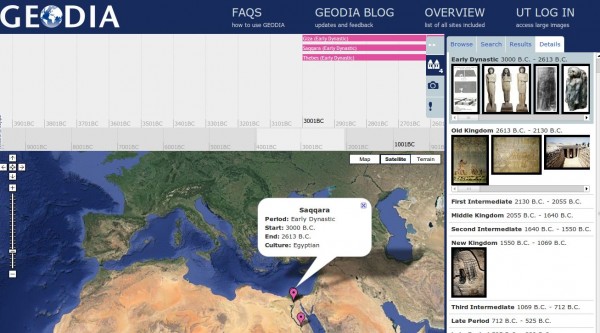
Creado por la Universidad de Texas, Geodia se presenta como una excelente herramienta para estudiantes y profesores de historia,
un recurso online que nos permite navegar por la cultura de diferentes
civilizaciones teniendo a un mapa y a una linea de tiempo como
protagonistas.
Solo tenemos que seleccionar la región que queremos analizar y
navegar por las diferentes épocas arrastrando el ratón por la linea
cronológica superior. El sitio se centra en la historia de los países
que rodean el mar Mediterráneo, siendo un gran lugar para conocer fotos,
lugares y detalles de las culturas que van desde el año 4.000 A.C al 330 de nuestra era.
Su base de datos se compone de dos elementos básicos: sitios
(definidos como puntos geográficos donde la actividad humana a largo
plazo ha dejado restos visibles) y eventos (definidos como cosas que
sucedieron en un lugar especifico y en un solo punto en el tiempo). Los
sitios se muestran con barras, los eventos con puntos.
Sobre el motivo por el que la universidad de Texas desarrolló algo así, comentan:
Geodia fue desarrollado para ayudar a los estudiantes a
entender la complejidad espacial, temporal y visual que caracteriza a la
cultura del antiguo mundo del Mediterráneo a través de miles de años.
Las disciplinas que estudian los restos del pasado, como la historia y
la arqueología o el arte, organizan la información (eventos, objetos,
monumentos) en torno a tres ejes principales: el tiempo, la cultura y el
lugar. A lo largo de cada eje, la información se agrupa a menudo por
las conexiones y similitudes percibidas: a lo largo del eje de tiempo,
la información se organiza en “períodos”, a lo largo del eje cultural en
reconocibles “culturas”; y a lo largo del eje espacial, en las zonas o
regiones geográficas.
Geodia utiliza la navegación para aplicar varios filtros de búsqueda a
lo largo de diferentes ejes de información, tales como regiones
geográficas y periodos cronológicos. Los resultados se muestran mediante
timemap.js, un mashup de Google Maps API y una línea de tiempo interactiva (el proyecto Simile, desarrollado en el MIT), junto con los recursos de imagen del proyecto Liberal Arts DASe (Digital Archive Services).
Para información más específica, puede visitar el sitio del proyecto en code.google.com/p/geodia
Link: Geodia | Vía freetech4teachers.com
In 44 BCE, the power and authority of Julius Caesar was absolute as he declared himself Rome's dictator for life. With the Roman army at his command, he was untouchable. There were those in the Roman Senate however, that were uneasy with his new title and formed a conspiracy to assassinate him. Among them was Marcus Brutus, a trusted friend of Julius Caesar. What would drive a man to murder his once mentor? Step into the shoes of a Roman citizen and locate Marcus Brutus to find out. Explore historically detailed locations through Rome and Greece, searching for clues to his whereabouts. Play various mini-games, puzzles, and more as you interact with historical figures including Marc Antony. Learn about the events that unfolded, interact with actual participants, and access informative articles courtesy of National Geographic in this amazing investigation.
Do you want to review before the exam? Using flash cards could be a good idea.
¿Como funciona? Es muy fácil. Te vas a encontrar tarjetas en las que aparecen los dioses y sus atributos en la misma cara, de esta manera los puedes estudiar.
¿Quieres comprobar que te los sabes? Desmarca la casilla Ambos lados y ya solo verás una cara de la tarjeta, los atributos o el nombre del dios. Para saber si has acertado haz click sobre la tarjeta y verás la respuesta.